Tuesday, September 24, 2013

besties ('88-'12)


         This is a series of best lists, from 1988 (the year of my birth) to 2012. There would be a tentative 2013 list as well, had I not chosen to group the movies by their year of completion rather than their US release date. The main effect compiling these lists has had on me is to make me newly aware of how many supposedly good movies of the '90s I haven't seen, and what a weird and motley bunch of those I have seen I've found room in my heart for. With the exception of years that are especially replete, my lists' last couple slots often contain movies I have either substantial problems with but can't shake for whatever reason, or a potent but nonspecific memory of, like the way the movie uses light, or its tone. I make no distinction between shorts and features (the movies vary between 2 minutes and 7 hours), and tried to include some TV episodes as well, ones that put the lie to the notion still holding strong in highbrow circles that TV by some handicap intrinsic to the medium cannot function as cinema. I will update these lists sporadically. Follow-ups covering earlier periods are likely. 
         Susan Sontag declared cinephilia dead in the '90s, but I see most of the decade as a long string of firecracker epiphanies. Even if every person who saw and loved Goodfellas or Rushmore or Tarantino's early movies when they came out didn't immediately become feverish, socially defective movie obsessives, the transaction that takes place between receptive audiences and those movies is nothing if not cinephilic. They make cinephiles out of you, even if it's only for their duration. As for the aughts, to me it felt like a richer time for movies than it did for many other people, likely because it was when I became a cinephile. In retrospect, I do see now that what we're basically looking at is several extremely good years ('07 being the pinnacle) with some valleys between them. Where the '90's saw an influx of exciting new independent and studio filmmakers, the aughts mainly featured those same filmmakers doing their thing, often at a high level of achievement, with few new voices joining their ranks. Independent cinema became increasingly bifurcated. Mainstream perception of independent film  was largely defined by medium-to-relatively-high budget comedies of quirk and atmospheric actor-driven dramas (often Sundance-approved and corporately subsidized), while spartan low budget productions, where most of the originality in American film was (and is) to be found, received a great deal of critical discussion but weren't given much of a chance, commercially. And for the most part their originality was of a tentative and self-effacing kind. Grand gestures were rare, and no headline-grabbing firebrands like Spike Lee or Tarantino emerged. One great filmmaker (Andrew Bujalski) and several good ones came out of this cycle, but otherwise alleged examinations of generational inarticulacy were oftentimes hard to distinguish from symptoms of same. International cinema was quite a treasure trove, though only a handful of new capital-G Great filmmakers emerged, foremost among them Apichatpong Weerasethakul.

1988
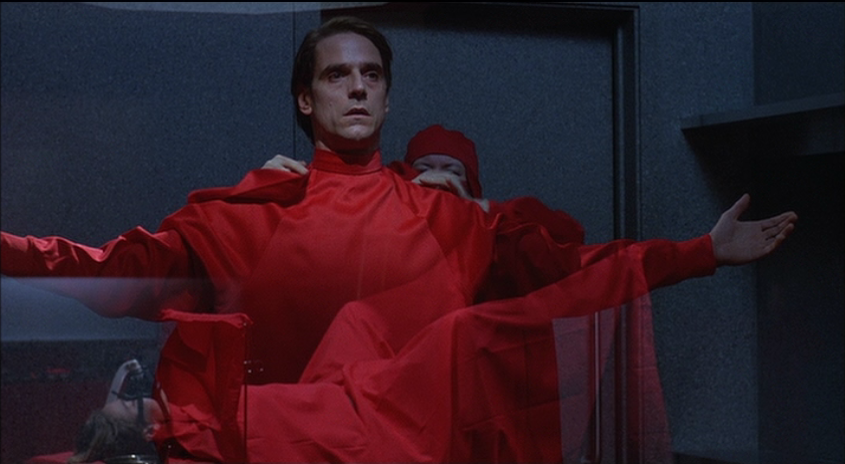
1. Dead Ringers (David Cronenberg)
2. Talking to Strangers (Rob Tregenza)
3. Grave of the Fireflies (Isao Takahata)
4. Damnation (Bela Tarr)
5. The Last Temptation of Christ (Martin Scorsese)
6. They Live (John Carpenter)
7. Akira (Katsuhiro Otomo)
8. Bird (Clint Eastwood)
9. Die Hard (John McTiernan)
10. Chocolat (Claire Denis)


1989
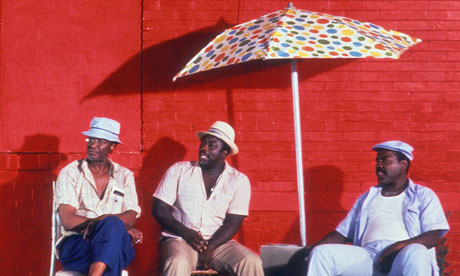
1. Do the Right Thing (Spike Lee)
2. The Killer (John Woo)
3. The Gang of Four (Jacques Rivette)
4. Life Lessons (Martin Scorsese)
5. Black Rain (Shohei Imamura)
6. Tetsuo: The Iron Man (Shinya Tsukamoto)
7. Mystery Train (Jim Jarmusch)
8. The Unbelievable Truth (Hal Hartley)
9. Santa Sangre (Alejandro Jodorowsky)
10. Why Has Bodhi-Dharma Left for the East? (Yong-Kyun Bae)

1990
1. Close-Up (Abbas Kiarostami)
2. Goodfellas (Martin Scorsese)
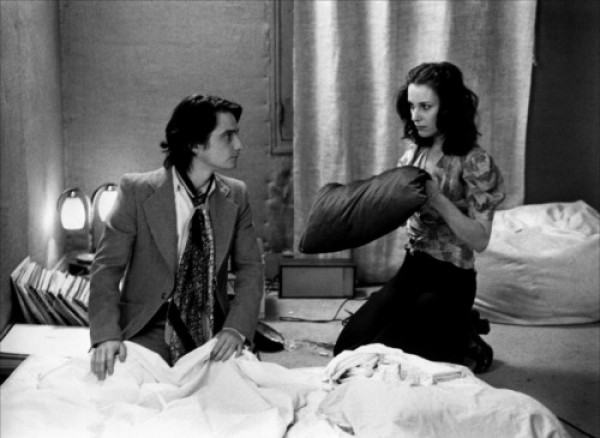
3. Days of Being Wild (Wong Kar-Wai)
4. Metropolitan (Whit Stillman)
5. Twin Peaks: "Pilot" (David Lynch)
6. Trust (Hal Hartley)
7. No Fear, No Die (Claire Denis)
8. Henry: Portrait of a Serial Killer (John McNaughton)
9. Jacques Rivette: The Night Watchman (Claire Denis)
10. Jacob’s Ladder (Adrian Lyne)
11. Wild at Heart (David Lynch)


1991
1. La Belle Noiseuse (Jacques Rivette)
2. Naked Lunch (David Cronenberg)
3. The Lovers on the Bridge (Leos Carax)
4. Surviving Desire (Hal Hartley)
5. The Double Life of Veronique (Krzysztof Kieslowski)
6. Barton Fink (Joel Coen)
7. My Own Private Idaho (Gus Van Sant)
8. Twin Peaks: "Episode 29 (Beyond Life and Death)" (David Lynch)
9. The Silence of the Lambs (Jonathan Demme)
10. Theory of Achievement (Hal Hartley)


1992
1. Twin Peaks: Fire Walk With Me (David Lynch)
2. Bad Lieutenant (Abel Ferrara)
3. Unforgiven (Clint Eastwood)
4. Reservoir Dogs (Quentin Tarantino)
5. Hard Boiled (John Woo)
6. The Player (Robert Altman
7. Orlando (Sally Potter)
8. Simple Men (Hal Hartley)
9. Rebels of the Neon God (Tsai Ming-liang)
10. Glengarry Glen Ross (James Foley)


1993
1. Je Vous Salue, Sarajevo (Jean-Luc Godard)
2. Naked (Mike Leigh)
3. The Puppetmaster (Hou Hsiao-hsien)
4. Dazed and Confused (Richard Linklater)
5. Carlito’s Way (Brian De Palma)
6. Helas Pour Moi (Jean-Luc Godard)
7. Three Colors: Blue (Krzysztof Kieslowski)
8. Sonatine (Takeshi Kitano)
9. Dead Alive (Peter Jackson)
10. Schindler’s List (Steven Spielberg)


1994
1. Satantango (Bela Tarr)
2. Crumb (Terry Zwigoff)
3. U.S. Go Home (Claire Denis)
4. Chungking Express (Wong Kar-Wai)
6. Cold Water (Olivier Assayas)
7. Pulp Fiction (Quentin Tarantino)
8. Vive L’Amour (Tsai Ming-liang)
9. Three Colors: Red (Krzysztof Kieslowski)
10. I Can’t Sleep (Claire Denis)


1995
1. Dead Man (Jim Jarmusch)
2. Ghost in the Shell (Mamoru Oshii)
3. Heat (Michael Mann)
4. Fallen Angels (Wong Kar-Wai)
5. Se7en (David Fincher)
6. The Addiction (Abel Ferrara)
7. Casino (Martin Scorsese)
8. Twelve Monkeys (Terry Gilliam)
9. Showgirls (Paul Verhoeven)
10. Maborosi (Hirokazu Koreeda)


1996
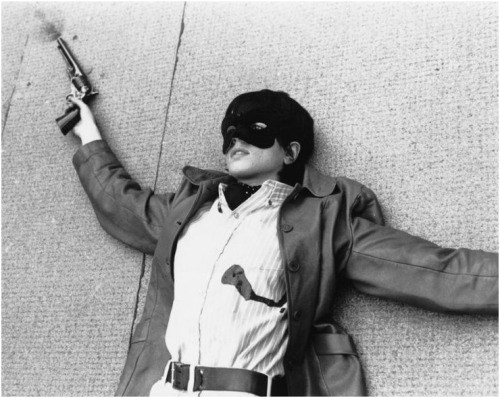
1. Irma Vep (Olivier Assayas)
2. Breaking the Waves (Lars Von Trier)
3. My Sex Life (How I Got Into an Argument) (Arnaud Desplechin)
4. Nenette et Boni (Claire Denis)
5. The Day a Pig Fell Into the Well (Hong Sang-soo)
6. Trainspotting (Danny Boyle)
7. Crash (David Cronenberg)
8. Fargo (Joel Coen)
9. Bottle Rocket (Wes Anderson)
10. Szamanka (Andrzej Zulawski)


1997
1. Henry Fool (Hal Hartley)
2. Taste of Cherry (Abbas Kiarostami)
3. Jackie Brown (Quentin Tarantino)
4. End of Evangelion (Hideaki Anno)
5. Gummo (Harmony Korine)
6. Starship Troopers (Paul Verhoeven)
7. Cure (Kiyoshi Kurosawa)
8. The River (Tsai Ming-liang)
9. Boogie Nights (Paul Thomas Anderson)
10. Fireworks (Takeshi Kitano)
11. Lost Highway (David Lynch)
12. Princess Mononoke (Hayao Miyazaki)
13. Happy Together (Wong Kar-Wai)


1998
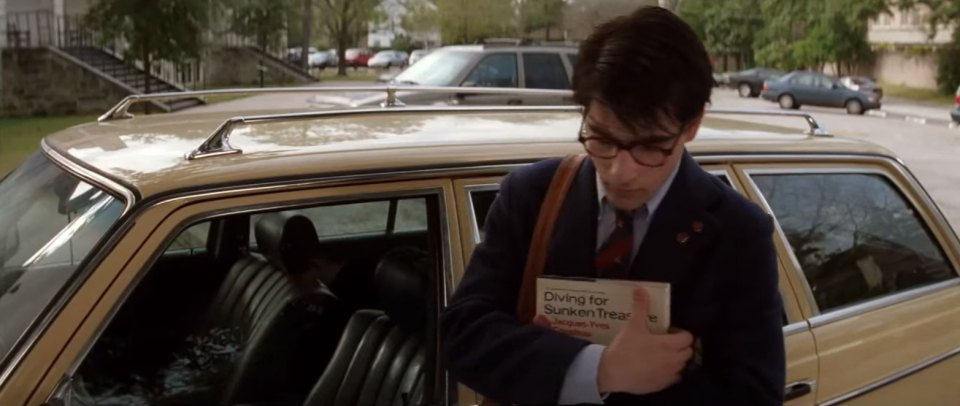
1. Rushmore (Wes Anderson)
2. Histoire(S) Du Cinema (Jean-Luc Godard)
3. The Big Lebowski (Joel Coen)
4. The Hole (Tsai Ming-liang)
5. Those Who Love Me Can Take the Train (Patrice Chereau)
6. Buffalo ’66 (Vincent Gallo)
7. The Thin Red Line (Terrence Malick)
8. The Last Days of Disco (Whit Stillman)
9. Fear and Loathing in Las Vegas (Terry Gilliam)
10. Sombre (Philippe Grandrieux)
11. There’s Something About Mary (Bobby and Peter Farrelly)
12. The Celebration (Thomas Vinterberg)
13. Honeymoon (Dan Sallitt)


1999
1. Beau Travail (Claire Denis)
2. Eyes Wide Shut (Stanley Kubrick)
3. Audition (Takashi Miike)
4. Time Regained (Raul Ruiz)
5. Magnolia (Paul Thomas Anderson)
6. Being John Malkovich (Spike Jonze)
7. The Sixth Sense (M. Night Shyamalan)
8. The Straight Story (David Lynch)
9. Fight Club (David Fincher)
10. Dead or Alive (Takashi Miike)


2000
1. Yi Yi: A One and a Two (Edward Yang)
2. Werckmeister Harmonies (Bela Tarr)
3. Esther Kahn (Arnaud Desplechin)
4. In the Mood for Love (Wong Kar-Wai)
5. The House of Mirth (Terence Davies)
6. Platform (Jia Zhang-ke)
7. Code Unknown (Michael Haneke)
8. You Can Count on Me (Kenneth Lonergan)
9. Buffy the Vampire Slayer: “Restless” (Joss Whedon)
10. Dead or Alive 2: Birds (Takashi Miike)
11. Mysterious Object at Noon (Apichatpong Weerasethakul)
12. Requiem for a Dream (Darren Aronofsky)


2001
1. Mulholland Dr. (David Lynch)
2. What Time Is It There? (Tsai Ming-liang)
3. Buffy the Vampire Slayer: “The Body” (Joss Whedon)
4. Pulse (Kiyoshi Kurosawa)
5. In Praise of Love (Jean-Luc Godard)
6. Millennium Actress (Satoshi Kon)
7. The Royal Tenenbaums (Wes Anderson)
8. Fat Girl (Catherine Breillat)
9. Donnie Darko (Richard Kelly)
10. The Sopranos: "Pine Barrens" (Steve Buscemi)
11. Trouble Every Day (Claire Denis)
12. Waking Life (Richard Linklater)
13. Pistol Opera (Seijun Suzuki)
14. A.I.: Artificial Intelligence (Steven Spielberg)
15. Ichi the Killer (Takashi Miike)


2002
1. Punch-drunk Love (Paul Thomas Anderson)
2. 25th Hour (Spike Lee)
3. The Son (Jean and Luc Dardenne)
4. Friday Night (Claire Denis)
5. Gerry (Gus Van Sant)
6. The Skywalk is Gone (Tsai Ming-liang)
7. Russian Ark (Alexander Sokurov)
8. Far From Heaven (Todd Haynes)
9. Femme Fatale (Brian De Palma)
10. Irreversible (Gaspar Noe)
11. Demonlover (Olivier Assayas)


2003
1. Gozu (Takashi Miike)
2. Los Angeles Plays Itself (Thom Andersen)
3. Memories of Murder (Bong Joon-ho)
4. Dogville (Lars von Trier)
5. Kill Bill Vol.1 (Quentin Tarantino)
6. Last Life in the Universe (Pen-ek Ratanaruang)
7. The Brown Bunny (Vincent Gallo)
8. Elephant (Gus Van Sant)
9. Goodbye Dragon Inn (Tsai Ming-liang)
10. Lost in Translation (Sofia Coppola)
11. The Triplets of Belleville (Sylvain Chomet)


2004
1. Kings and Queen (Arnaud Desplechin)
2. Shaun of the Dead (Edgar Wright)
3. Tropical Malady (Apitchatpong Weerasethakul)
4. Eternal Sunshine of the Spotless Mind (Michel Gondry)
5. 2046 (Wong Kar-Wai)
6. Notre Musique (Jean-Luc Godard)
7. L’Intrus (Claire Denis)
8. The Life Aquatic with Steve Zissou (Wes Anderson)
9. Birth (Jonathan Glazer)
10. Kill Bill Vol. 2 (Quentin Tarantino)


2005
1. The New World (Terrence Malick)
2. Regular Lovers (Philippe Garrel)
3. Three Times (Hou Hsiao-hsien)
4. A Tale of Cinema  (Hong Sang-soo)
5. A History of Violence (David Cronenberg)
6. The Wayward Cloud (Tsai Ming-liang)
7. The Devil’s Rejects (Rob Zombie)
8. Deadwood: "A Lie Agreed Upon, Parts 1 and 2" (Ed Bianchi)
9. Mutual Appreciation (Andrew Bujalski)
10. Grizzly Man (Werner Herzog)
11. The Squid and the Whale (Noah Baumbach)
12. War of the Worlds (Steven Spielberg)
13. Serenity (Joss Whedon)
14. Broken Flowers (Jim Jarmusch)


2006
1. INLAND EMPIRE (David Lynch)
2. Miami Vice (Michael Mann)
3. Woman on the Beach (Hong Sang-soo)
4. Colossal Youth (Pedro Costa)
5. Syndromes and a Century (Apitchatpong Weerasethakul)
6. Paprika (Satoshi Kon)
7. Children of Men (Alfonso Cuaron)
8. A Scanner Darkly (Richard Linklater)
9. The Host (Bong Joon-ho)
10. Brand Upon The Brain! (Guy Maddin)
11. The Devil and Daniel Johnston (Jeff Feuerzeig)
12. Black Book (Paul Verhoeven)


2007
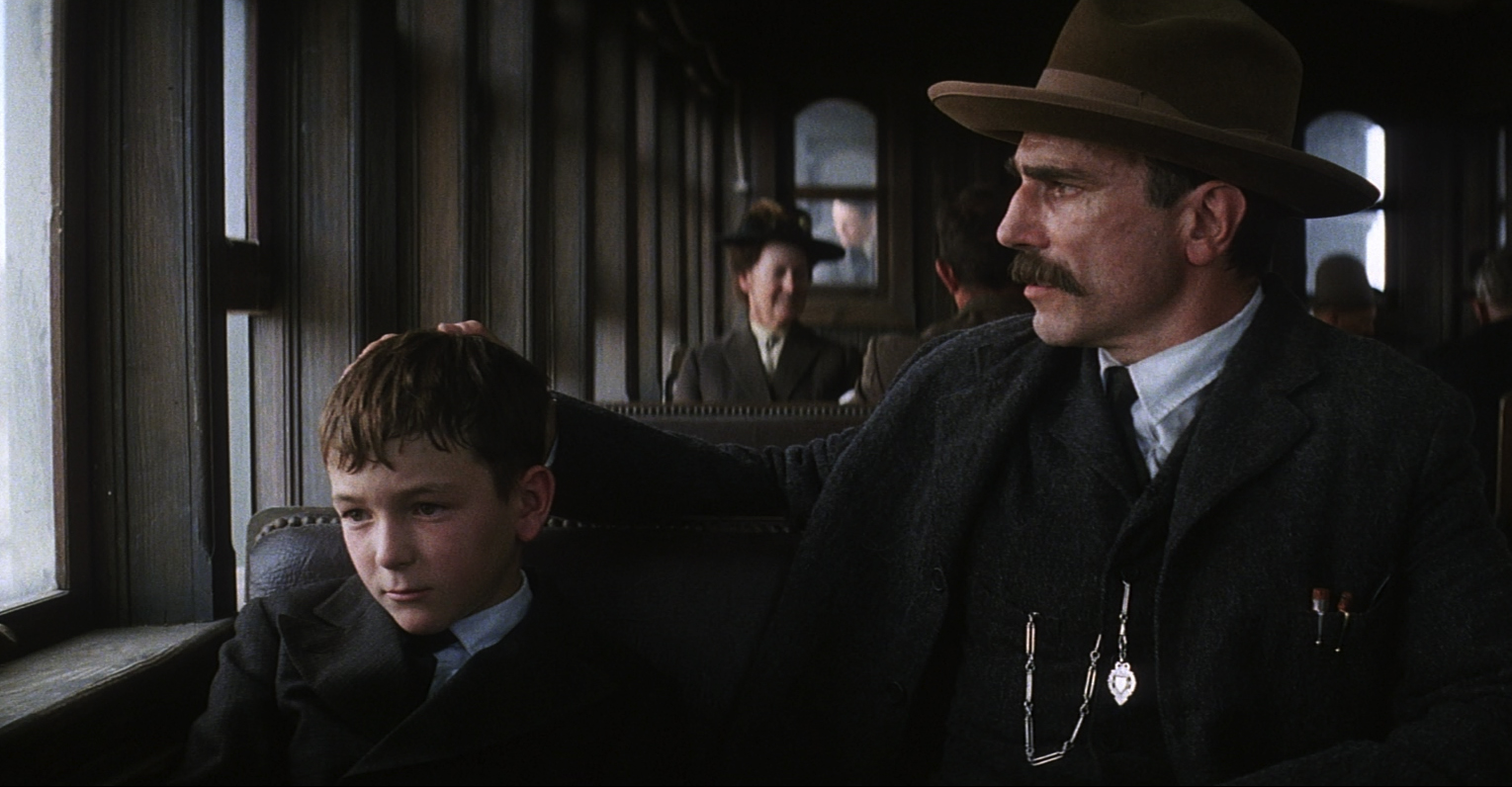
1. There Will Be Blood (Paul Thomas Anderson)
2. Zodiac (David Fincher)
3. Death Proof (Quentin Tarantino)
4. I’m Not There (Todd Haynes)
5. No Country For Old Men (Joel and Ethan Coen)
6. The Darjeeling Limited (Wes Anderson)
7. Hot Fuzz (Edgar Wright)
8. Eastern Promises (David Cronenberg)
9. Aqua Teen Hunger Force Colon Movie Film For Theaters (Matt Maiellaro, Dave Willis)
10. The Man From London (Bela Tarr)

2008
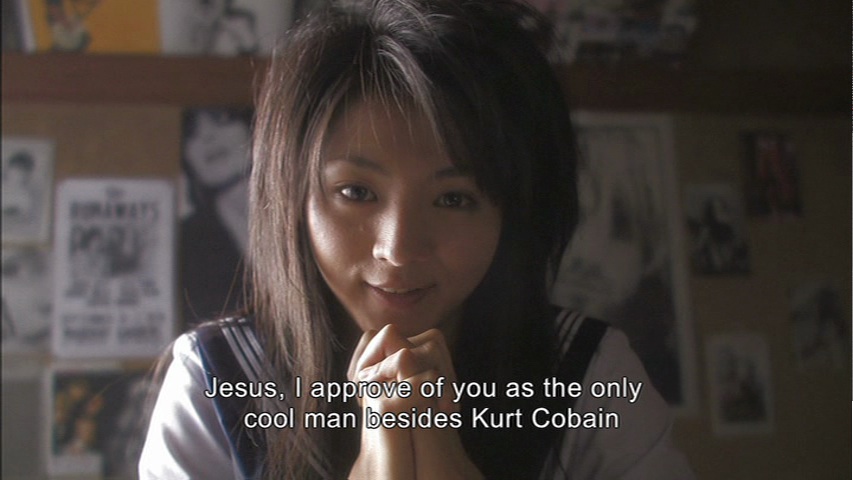
1. Love Exposure (Sion Sono)
2. A Christmas Tale (Arnaud Desplechin)
3. Night and Day (Hong Sang-soo)
4. 35 Shots of Rum (Claire Denis)
5. Synecdoche, New York (Charlie Kaufman)
6. Summer Hours (Olivier Assayas)
7. Flight of the Red Balloon (Hou Hsiao-hsien)
8. Burn After Reading (Joel and Ethan Coen)
9. Merde (Leos Carax)
10. Let the Right One In (Tomas Alfredson)
11. The Wrestler (Darren Aronofsky)
12. Hunger (Steve McQueen)
13. Rachel Getting Married (Jonathan Demme)
14. Waltz With Bashir (Ari Folman)

2009
1. Inglourious Basterds (Quentin Tarantino)
2. It Felt Like A Kiss (Adam Curtis)
3. Fantastic Mr. Fox (Wes Anderson)
4. Wild Grass (Alain Resnais)
5. A Serious Man (Joel and Ethan Coen)
6. Two Lovers (James Gray)
7. The Limits of Control (Jim Jarmusch)
8. Lost in the Mountains (Hong Sang-soo)
9. Dogtooth (Yorgos Lanthimos)
10. Symbol (Hitoshi Matsumoto)
11. The Girlfriend Experience (Steven Soderbergh)
12. Enter the Void (Gaspar Noe)
13. Impolex (Alex Ross Perry)


2010
1. Uncle Boonmee Who Can Recall His Past Lives (Apichatpong Weerasethakul)
2. The Social Network (David Fincher)
3. Certified Copy (Abbas Kiarostami)
4. Mysteries of Lisbon (Raul Ruiz)
5. ATTENBERG (Athina Rachel Tsangari)
6. The Ghost Writer (Roman Polanski)
7. Film Socialisme (Jean-Luc Godard)
8. Carlos (Olivier Assayas)
9. Greenberg (Noah Baumbach)
10. Breaking Bad: "Fly" (Rian Johnson)
10. Oki’s Movie (Hong Sang-soo)
11. 13 Assassins (Takashi Miike)
12. Foreign Parts (Verena Paravel and J.P. Sniadecki)
13. Shutter Island (Martin Scorsese)
14. Four Lions (Chris Morris)


2011
1. Margaret (Kenneth Lonergan)
2. The Tree of Life (Terrence Malick)
3. A Separation (Asghar Farhadi)
4. House of Tolerance (Bertrand Bonello)
5. The Day He Arrives (Hong Sang-soo)
6. The Color Wheel (Alex Ross Perry)
7. Kill List (Ben Wheatley)
8. Breaking Bad: "Crawl Space" (Scott Winant)
9. Meanwhile (Hal Hartley)
10. Meek’s Cutoff (Kelly Reichert)
11. The Loneliest Planet (Julia Loktev)
12. A Dangerous Method (David Cronenberg)


2012
1. Moonrise Kingdom (Wes Anderson)
2. Holy Motors (Leos Carax)
3. The Unspeakable Act (Dan Sallitt)
4. The Master (Paul Thomas Anderson)
5. This Is Not A Film (Jafar Panahi)
6. Leviathan (Lucien Castaing-Taylor and Verena Paravel)
7. Cosmopolis (David Cronenberg)
8. Mad Men: "Far Away Places" (Scott Hornbacher)
9. Sweet Exorcist (Pedro Costa)
10. Something in the Air (Apres Mai) (Olivier Assayas)
11. Spring Breakers (Harmony Korine)
12. In Another Country (Hong Sang-soo)
13. Frances Ha (Noah Baumbach)
14. You Ain't Seen Nothin' Yet (Alain Resnais)
15. The Act of Killing (Joshua Oppenheimer)
16. Berberian Sound Studio (Peter Strickland)
17. All the Light in the Sky (Joe Swanberg)


Friday, September 13, 2013

catching up #1


         The surface of Andrew Bujalski's Computer Chess (2013) is very deceptive, and the handful of negative or middling notices it's received reflect either an inability to see beyond it, or a recourse to first impressions after being flummoxed by what's actually up there on the screen.* What begins as a mockumentary shot on bleary, antiquated video about a computer chess tournament (in what's either the late '70s or early '80s) reveals itself to be a far more unpredictable work of experimental fiction-making, whose narrative is less a straightahead story than a program, originally intended as a delivery system for narrative information, that goes progressively haywire as the movie unfolds. Its real foundations aren't mumblecore, Christopher Guest, or the "found footage" genre, but Jacques Rivette (narrative ruptures, proliferating mysteries, radical open-endedness), Robert Altman at his wiggiest (it creates a teeming and very American social world, with surrealism lurking around its edges), and David Foster Wallace (despite playing out on a much smaller canvas, the movie gets about as close to the comedic sensibility and structure of the latter's Infinite Jest as any movie in memory). The strongest American movie of the year thus far, and among the strangest.


         But the smartest American movie I've seen this year, and the most genuinely sweet, is film critic-cum-filmmaker Dan Sallitt's The Unspeakable Act (2012). That it winds up being so affecting is one of its biggest surprises, given that the plot revolves around the potentially seamy topic of a teenage girl (Tallie Medel) longing incestuously for her brother (Sky Hirschkron), and that Sallitt's rigorous style is initially distancing. From the get-go his compositions (realized in a high def digital that refreshingly doesn't try to look like film) are mathematically exact, his soundscape so sparse as to seem almost unfinished (there's no musical score and Medel's narration is mixed unusually), and the movements and line readings of his actors just a couple shades more naturalistic than those found in the work of Hal Hartley. Within this slightly regimented framework something extraordinary happens, or rather several extraordinary somethings: the unfolding and transformation of one character's singularly bizarre pathology in a relatable, acutely observed, and often very funny way (its funniness often proceeding from its acuteness); Medel's riveting and entirely believable performance as a hyper-articulate teen wrestling with a transgressive obsession; and Sallitt's emergence as a rare bird in our independent cinema, a filmmaker drawing inspiration not from the flashy end of the Nouvelle Vague, the 90km/h pathos of Truffaut or the helter-skelter modernist experimentalism of Godard, but its more contemplative and less (immediately) sexy side, that of Rohmer, and insodoing is a yet rarer bird, an American filmmaker who is literary in the best sense of the term.


         The Lords of Salem (2013) is the third Rob Zombie movie in a row to be at once a failure by the metrics we usually apply to horror movies (even the particularly disreputable ones Zombie's been trying to emulate) and more funky and distinctive than any other recent movie in the genre. The plot is routine, the dialogue consummately atrocious, the acting almost entirely awful, and the pacing and editing more off than they've been since Zombie's amateurish debut feature, House of 1000 Corpses (2003), as a result of all of which the proceedings are hard to grok as one groks the average spookfest (gut-level viewer involvement is unlikely). And yet there are many elements here to enjoy: several undeniably creepy moments (e.g., a hideous apparition hovering motionless in a kitchen, unseen by protag Heidi (Sheri Moon Zombie, still not any good)), an affectionate and detailed portrait of a musical subculture, audacious hallucinatory sequences full of wild blasphemous Ken Russelloid imagery, and a nutty finale that comes very close to the Z-movie poetry Zombie's always aspiring toward, and which he's only completely achieved in The Devil's Rejects (2005), about as close as the last decade's exploitation revival came to a trash masterpiece. It remains to be seen whether he will ever again conjure the front-to-back discipline to make another movie as exquisitely appalling. For now, stick a few moments from this in that steadily expanding file, Rob Zombie as Potentially Great Horror Auteur.


         After a disastrous attempt at a pseudo-documentary anti-war polemic in Redacted (2007), Brian De Palma is back in territory more amenable to his strengths with Passion (2012), a remake of Alain Corneau's corporate espionage thriller Love Crime (2010). The movie's essentially a teasingly sapphic game of cat and mouse between corporate honcho Christine (Rachel McAdams, absurdly miscast) and upstart underling Isabelle (Noomi Rapace, marginally less absurdly miscast) that appears to take place in an Apple Store decked out with ersatz noirish lighting by some Eurotrash branch manager. The first half is ludicrous in a pretty dull way--for one thing, the kinkiness quotient never escalates as high as the setup suggests it will--but when De Palma tightens the proverbial screws with an impeccably realized split-screen sequence, which is probably the best "pure cinema" moment in a De Palma film since the opening of Femme Fatale (2002), things quickly become ludicrous in a highly engaging way. For all of the screens within screens that suggest another iteration of De Palma's perennial theme of voyeurism, the movie's secret theme is the inherent mix-and-match absurdity of the kind of international co-production it represents: a French-German-Spanish-British production of a remake of a French movie, directed by an American and starring an American and a Swede. It supposedly takes place in Germany but really takes place in no place, a generic simulacrum of Europe, all anonymous surfaces. Looked at this way, the movie might make an intriguing double bill, if one is inclined toward impossibly esoteric double bills, with Godard's King Lear (1987), an international coproduction that also takes place in no place (which for JLG may or may not be near the Kingdom of France). Passion raises the question of what significance a "classic" De Palma movie possesses now that he's no longer making them in Hollywood. One of the things that makes some of his earlier work vital and interesting to me is how his stylistic rapture and exuberant rejection of narrative plausibility constitutes an intervention in mainstream cinema. The tension between engaging a mass audience and indulging in a kind of fetishistic delirium is the energizing force of much of his best work. Passion is essentially an insular doodle for his loyalists and people who want to see McAdams and Rapace make out (the latter being admittedly a larger demographic). Which is just fine. But what would be more than just fine is if he took advantage of his more marginal position in the world of commercial film to make another movie like Hi, Mom! (1970).


*Roger Ebert's posthumous two-star review, for instance, dismisses Computer Chess as a technically impressive lark, and appears to have been written with substantial input from Ogre from Revenge of the Nerds. (But given the circumstances in which he probably saw and wrote about the film, I can't really blame him for not finding its tricky wavelength.)

Tuesday, August 20, 2013

OUT 1.6: Spectre Pattern Analysis

   
         About 50 minutes into Out 1: Spectre (1974), Jacques Rivette's 250-minute cut of his 700+ minute behemoth Noli Me Tangere (1971), I took a break. I didn't have to take a call or a nap, nor did I have any bodily needs to fulfill. I simply felt the urge to get away from it. Even though I had seen all Spectre was going to show me (and more) in the longer cut, it was kind of freaking me out. I'd heard it was a more difficult piece of work than Noli Me Tangere, which I doubted (it seemed logistically a much easier work to consume), but it's true. Long swaths of Spectre take pieces of scenes that originally played out in languid real-time and intercut them with other scenes in highly disorienting fashion, often dropping into this already complex-to-the-point-of-near-chaos editorial schema black & white photographs of scenes that have either occurred, are yet to occur, or will never occur in this cut, accompanied by an ominous electronic hum. The search for the identity and purpose of the mysterious Thirteen is now the only thread we have to keep our bearings in an initially overpowering blitz of incident, much of it simultaneously trivial and pulsing with ominous significance.
         Several posts ago, I wrote of the longer cut that "[T]he characters' attempts to find a way Out, to puncture through the veil of banal reality Into a magical world of conspiracy and all-connectedness, only leave them trapped further Inside their little solipsistic bubbles. While that occurs In the fiction, the film that contains the fiction is another matter. The dreams of the characters fizzle and implode, while the dream In which they're figured expands ever Outward." In Spectre, the relation of the film to the mental state of the characters is more 1:1. The difference between Noli Me Tangere and Spectre is that of a film about paranoia and a paranoid film. Spectre doesn't expand outward, it contracts inward, a  discombobulating sensation that's hard to deal with for an hour, let alone four. Rivette seems to have realized this, as the pace of the film slackens considerably after the first hour and change. Many sequences in the film's second half play out at close to their original length. But since the montage conjures such a sinister tone, what often plays out as a kind of intellectualized stoner comedy in the longer cut is here suffused with dread. 


2 other ways of thinking about the two cuts: 

  1. Noli Me Tangere is a good trip; Spectre is a bad trip. 
  2. Both are improvisatory games played over the void (or, alternately, the real, i.e. the stuff of life that we impose meaning/narrative onto), but Noli Me Tangere smiles at the void/real and Spectre gives itself vertigo contemplating it.


         Despite being a considerably freakier film, Spectre omits the two strangest, most jarring scenes in Noli Me Tangere: a scene where a dazed Colin (Jean-Pierre Leaud) has a conversation with Sarah (Bernadette Lafont) in which seemingly crucial lines of dialogue are looped backwards (in effect rendering the scene incomprehensible except as a representation of Colin's escalating madness); and a scene where Sarah stares with unsettling intensity at Pauline/Emilie (Bulle Ogier) and asks her repetitive questions, which goes on at such length that they--or the film itself--seem to have become stuck in a temporal loop.* It's a credit to Rivette's editorial genius that one doesn't feel the absence.
         I'm tempted here to make some kind of qualitative pronouncement about which cut is "better." I found Spectre's pleasures harder to access than those of Noli Me Tangere, whose tone and rhythm is more inviting, and which I'll probably return to more often, despite its being thrice Spectre's length. But I can't hold one over the other. Out 1, in either form, confounds the kind of language we typically use to speak about movies. It's notsomuch that value judgments don't enter into it (since we can of course go through either version and cherry-pick which scenes don't really hold together and which scenes are, like, the best thing ever), but that they couldn't be more beside the point of the thing.


*The fate of Papageorge (Myles Paige) in Andrew Bujalski's Computer Chess (2013) bears more than a passing resemblance to this scene. In addition to being the best American film of the year thus far, Chess is quite a Rivettian one, despite its comparatively attenuated length and very American idiom. But it's not the most Rivettian thing out right now, judging from what I've read about Matías Piñeiro's even-shorter Viola (2013). Do I sense a mini-Rivettaisance coming on?

Thursday, August 8, 2013

OUT 1.5: how does one Out 1?


  1. Live in or around (or be willing and able to travel to) wherever the film happens to be screening. Screenings are a very rare occurrence, and most likely to happen in major cities with thriving cinephilic communities. NYC is probably one's best bet in the US, as the film has been screened several times there, first in 2006. The one print in circulation is putatively quite good, considering the film's rarity, though it has no hardcoded English subtitles, so subtitling is usually accomplished live. I regret not seeing it theatrically. Sharing one's delight, exhaustion, and bafflement is by many accounts one of the Out 1 experience's greatest pleasures.
  2. There is a bootleg copy of the film, a VHS rip from an airing of it on the Italian TV network Raitre. It can be downloaded by torrent, and occasionally makes an appearance on YouTube. There are hardcoded Italian subtitles, but soft English subs are available. I can't vouch for the subs' quality, but I can say that the picture quality is just clear enough to get the gist of what's going on, and no better.
  3. A 5-DVD Region 2 set featuring both the 12 hour (Noli Me Tangere) and 4 hour (Spectre) versions of Out 1 has recently been released by Absolut Medien, who (regardless of the package's several significant issues) are true gods among Teutons for putting it out. There are English subtitles available for Noli Me Tangere, but the subtitles for Spectre and the plentiful and tantalizing extras (including introductions to each episode by Rivette and an interview with Eric Rohmer), as well as a text-heavy booklet, are German only. However, I was able to locate with only a modicum of digging adequate English subtitles for Spectre, which can be manually added to the film if one plays it through a computer-based media player with that feature (VLC Player will do the trick). The unofficial Spectre subs are actually stronger in some respects than the official Noli Me Tangere subs, which while more polished as a translation, leave out large swaths of the dialogue in the theater exercises, and are sometimes ill-timed, rendering certain sequences harder to follow than they already are. The picture quality of Noli Me Tangere is greatly superior to the bootleg, if grainy and with noticeable damage. Spectre's image is a tad murkier but still highly watchable. The set's worst flaw is that the image in Episode 1 of Noli Me Tangere has been vertically stretched, which has the effect of cutting off the top and bottom margins of the frame. It doesn't appear to leave out any essential visual information, but it's a strange and unfortunate mistake. The film deserves better. 
  4. Wait until Criterion or another cadre of brave and mighty souls drops a Region 1 set upon us.

Absolut Medien
Bootleg
     

Friday, July 26, 2013

OUT 1.4 1/2: Bernadette Lafont (Sarah)

La Beau Serge (1958, Claude Chabrol)
La Revelateur (1968, Philippe Garrel)

Out 1 (1971, Jacques Rivette); Out 1: Spectre (1974, Jacques Rivette)
The Mother and the Whore (1973, Jean Eustache)
http://www.deadline.com/2013/07/r-i-p-bernadette-lafont/

OUT 1.4: Don't think that I am silent out of pride or stubbornness.


        One of the most notable structural features of Jacques Rivette's Out 1 (1971) is that about half of its 729-minute running time is given over to the acting exercises of two theater groups. The ostensible goal of both groups is to find fresh angles from which to approach the work of Aeschlyus, but although some of their exercises yield intellectual and emotional rewards for their participants, the groups fall apart before the plays are ever performed.


         So why on earth does Rivette make us watch, interspersed with the slightly more conventional narrative material involving Colin (Jean-Pierre Leaud) and Frederique (Juliet Berto) and, eventually, the members of the two groups, hours upon hours of these exercises? Of all the film's difficulties and eccentricities, this is the one most likely to have prevented it from being more widely seen. Presenting us with such a bulk of seemingly irrelevant and aimless material is a brazen violation of the expectations we tend to carry into even the most artistically adventurous narrative cinema.* In fact, the exercises so dominate the first several hours of the film that for long stretches it doesn't seem like we're watching narrative cinema at all, but something between a barely-edited assemblage of footage for a documentary about experimental theater techniques, and one of Warhol's conceptual films. There is no one simple answer as to why these sequences are there; however, there are multiple, complex ones:
  • The structure of Out 1 is that of a narrative gradually taking shape from chaos, a narrative in which the characters think they're uncovering a secret order underlying the random flux and tedium of life, but may in fact be generating that order themselves by searching for it. The theater exercises serve both as examples of that flux and tedium, and, particularly the exercises of Thomas's (Michael Lonsdale) group, as microcosms of the film's structure, because they involve the actors attempting to build some narrative order from their improvisations.
  • Juxtaposing them with the scenes outside of the theater has a dialectical effect, throwing light on both the performative nature of "real life" and the reality that is still present in, or heightened by, theatrical performance. One of the film's most brilliant coups is the feeling it sometimes achieves that what unfolds within the performance space is closer to the capital-R Real than what unfolds outside of it.
  • Rivette has stated that, for him, everything actors do is interesting. Other than his unorthodox approach to duration, this is the most radical aspect of his work, and Out 1 its ultimate expression. Not everything the actors do in the film (whether within the confines of the theater or in the outside world) succeeds, but by immersing us so exhaustively in process, Rivette scrambles our notions of success and failure. A scene that fails to lead anywhere narratively can be enjoyable as its own, wayward thing. Take, for example, an interminable single-take interlude involving Thomas, the woman alternately referred to as Pauline and Emile (Bulle Ogier), some toddlers and a live turtle. It seems to have been intended initially to advance the conspiracy plot, but the dialogue Lonsdale and Ogier come up with is vague and repetitive and both are continually sidetracked by the behavior of the kids and the critter, the former of which don't appear to have been instructed to ignore the camera's presence and so spend stretches of the scene staring right into the lens. As exasperating as this is on one level (Christ, when will it end!), as the minutes accumulate a certain dry hilarity takes hold. In the context Rivette creates by devoting so much time to the exercises, watching the film's narrative stutter and stall becomes part of its fun.
  • By taking such a leisurely approach to connecting the lives of Colin and Frederique with that of the two theater groups, Rivette achieves a strange and potent sort of suspense. The intercutting of the exercises and the equally hermetic antics of Colin and Frederique compels us to wonder how and when connections will be drawn between them. Rivette holds off long enough that when the threads finally do overlap, we're hit with a force that belies the casual, offhand presentation and resembles the kind of payoff one might derive from a more conventional suspense thriller.**
  • Another lens through which to interpret the exercises is that of jazz. Jonathan Rosenbaum, who has been the film's most vocal American proponent since the '70s, uses Ornette Coleman's Free Jazz as a point of comparison. Both Coleman and Rivette arrange the improvisation so that performers with very different energies wind up playing off each other in interesting ways: "Much like Coleman’s thirty-eight-minute venture into group improvisation with seven other musicians, [Out 1]’s surface is dictated by accommodations, combinations, and clashes brought about by contrasting styles of 'playing.' The textures run the gamut from the purely cinematic skills of Jean-Pierre Léaud and Juliet Berto to the stage-bound techniques of Françoise Fabian; from the nervousness of Michel Lonsdale to the placidity of Jacques Doniol-Valcroze; from the reticence of Bulle Ogier to the garrulity of Bernadette Lafont."*** The exercises especially could be said to resemble warts-and-all jazz sessions.
         Certainly, a couple of the theater exercises will try the patience of even the most Buddhistic of audiences. But one exercise, in the first episode, is one of the most transporting sequences in all of cinema. To find a way into the language of Prometheus Bound, Thomas's group enacts, in miniature, the development of language itself. We follow the actors as they move from silence and stillness, to primitive yowlings and insensate gestures, to the development of art and myth, before, after about half an hour, one of the actors begins, haltingly, to speak a line from the play: "Don't think… that I am silent… out of pride or stubbornness…"
         Much of the sequence is so extreme you might want to recoil from it, consisting as it does of dozens of minutes of people rolling about and pawing each other like condemned spirits writhing in the pits of Hades, their screams forming the vocal equivalent of an assaultive recording by the Peter Brötzmann Quartet, yet it's hard to look away from. Even though we know on some level that it's a theater exercise and not a group of Gallic hippies going insane before our eyes (that comes later), there's a sense that what we're witnessing is tunneling much deeper than we thought screen acting could go (was permitted to go) into the primordial stuff underlying human experience. As a sense of what's happening before us begins to dawn, we start to root for them, and by the end of the sequence, as the line from the play is finally spoken, repeated, broken down, and subsumed back into the mass of inchoate burbling, bleating, and moaning, we feel like we've become one with them. When they finally break out of the exercise to sit down and rap about the experience, we're as curious as anyone onscreen as to how they'll make sense of what they've just done. Out 1 hits several pinnacles as it progresses; this is the first, and maybe the highest.

This clip, while a useful illustration, probably doesn't give one a sense of the incredible power of this sequence. 
Experiencing the full duration of it is necessary.

*Compare it, for instance, with another monument of durational cinema, Bela Tarr's 432-minute film Satantango (1994), which consists of 150 extremely lengthy and slow-moving shots. These often linger beyond the point of narrative necessity, but each ultimately advances the film's plot.
**One of the reasons I love long-form cinema is its capacity to make two characters simply passing each other in a store as thrilling as twenty car chases.
***Rosenbaum's actually writing here about Out 1: Spectre (1974), a 250-minute cut of Out 1 which I have yet to see, but anticipate doing so before this cycle of pieces concludes. Though Spectre's reputedly a very different film, this passage seems equally applicable to the longer version (which sometimes is referred to as Noli Me Tangere (Don't Touch Me)).

Wednesday, July 24, 2013

OUT 1.3: what's in a name?

     
         Jacques Rivette's Out 1 (1971) was lent its name because it was too immense an undertaking to have a more specific one. Rivette didn't want us to think one thread or theme in the teeming flow of ideas, plots and counterplots is more important than any other, so he gave it something more along the lines of codename for a military operation* than the name of a film. But the name seems not entirely arbitrary. In 1, for instance, wouldn't have the same resonance, though the characters' attempts to find a way Out, to puncture through the veil of banal reality Into a magical world of conspiracy and all-connectedness, only leave them trapped further Inside their little solipsistic bubbles. While that occurs In the fiction, the film that contains the fiction is another matter. The dreams of the characters fizzle and implode, while the dream In which they're figured expands ever Outward. The final shot of the film, returning to a character abandoned hours earlier, right where it left her, at once completes the structure** of the final episode In completely unexpected fashion, and suggests that the film could keep going Indefinitely, taking any number of directions. There are sequences In Out 1 that are so claustrophobic as to feel purgatorial, but its last several seconds open Out to embrace everything.
********
         The film scholar Sally Shafto, in her introduction to the film, has another take on the meaning of the title: "The first half plays off of the popular American adjective in the late 60s and early 70s: 'in.' If something was 'in,' it was hip, cool, or groovy, to use other qualifiers of that time. Rivette intuitively and lucidly sensed that his film, originally done for French television, would exceed all norms and indeed the film was rejected by the ORTF."
********
         While one of the points I was attempting (in cheeky fashion) to make in the second post in this series was how the film's revolutionary potential has been limited by its lack of distribution, it's also fitting that the film has been so elusive for the past 42 years, in that it has put cinephiles on Rivette's wavelength (raises hand) in the same position as the film's characters, longing and searching for our own way out, which in this case constitutes an escape from the viewing practices and expectations that commercial cinema imposes upon us. What is miraculous about the film is that it largely manages to live up to our dream of it, and delivers a satisfaction that eludes its characters.
         That said, once the glow of the film has faded (to the extent that it ever does), we're left in a curious place. Once we've been out, there are few places to go but back in, back to the way most movies have been doing it for a century. Even Rivette never went quite this far out on a limb again. Many of his subsequent films are uncommercial in their demands on one's time and intellect (Duelle (1976) and Noroit (1976) are more esoteric, the latter so much so that it was denied theatrical distribution), but they all restore one or two of the supports that he kicks away in Out 1. As for us, do we spend our days pining away for our next chance to enter the labyrinth? Do we let our Out 1 experience color our viewing of Sharknado (2013)? Do we try to grapple with and unpack our experience of it, on a blog, say? All of the above?
         The position in which Out 1's viewers find themselves after the film's conclusion parallels the position of the bohemian left in France after May '68--the film's never explicitly stated but obvious context--or, more broadly, the position of the counterculture in the aftermath of the upheavals of the '60s, or, yet more broadly, the aftermath of any promising-but-failed movement against the status quo, from the Paris Commune to Occupy.*** Having glimpsed another way, where do we go from here?
********
         As for the "1," I think it's a clear message to every other filmmaker. Now that Out 1 is on DVD in reasonably good quality, is it naive of me to hope a few of them will heed it?
********   
         But then another part of me, the part that really feels for the plight of Colin (Jean-Pierre Leaud), wants to believe that "Out 1" is actually a very obscure term used in film production, whose meaning only a handful of filmmakers have ever known, and which, if discovered, will explain to us what Rivette was truly getting at here. But if Rivette hasn't forgotten it by now, he'll never tell it. His love of mystery is too strong. He'll happily take the secret to his grave.


*An impression further encouraged by the name of the shorter and reputedly very different version of the film, Spectre (1974). (Jacques Rivette's Out 1: Spectre is an Xbox game waiting to happen.)
**The titles of the film's 8 episodes each draw a connection between two of the characters: "From Lili to Thomas," "From Sarah to Colin," and so on. In some, the connection being drawn is straightforward, in others it's more obscure.
***The film is by no means politically didactic, but if anything it's more politically radical than the more overtly political films Godard was making around the same time, because it doesn't talk about its politics, but puts them into action. It was truly a communal effort, with the actors developing their own characters and dialogue. And the space it creates for viewers is something like the spectatorial equivalent of a Situationist dérive. Claire Denis, who, in addition to being one of our finest living filmmakers and the director of a very fine documentary on Rivette, was present both on set and at the first screening of Out 1, says of it: "Everything was political then. Making the film was political. So was watching it."